/5nifsv3uy023526v9ay84dmpjnj1)
Content
Some of Northern Kentucky and Cincinnati's highest-level politicians gathered Friday afternoon for a (dubious but nevertheless flashy and media-friendly) "groundbreaking" ceremony to commemorate the start of construction on the Brent Spence's new companion bridge and roughly eight miles of highway expansion on either side of the river.
Maybe they've all forgotten about the pending lawsuit -- filed in federal court and still under a judge's review -- calling for an updated environmental impact review on this major project, which stands to disrupt and pollute numerous urban core communities and induce even greater dependence on cars throughout our region for decades to come.
Construction or destruction?
“Today, after decades of planning and preparation, we are finally breaking ground on a solution to the traffic headaches and interstate commerce delays caused by the overcrowded Brent Spence Bridge,” said Ohio Gov. Mike DeWine at Friday's groundbreaking. DeWine was joined by his Bluegrass counterpart, Gov. Andy Beshear, as well as Mayors Aftab Pureval and Ron Washington, of Cincinnati and Covington, respectively, and various Congress members, including Sen. Mitch McConnell from Kentucky and former Sen. Rob Portman of Ohio.
Yet, just a few hundred feet from Friday's ceremony sits a symbol of the destruction that comes with this groundbreaking: Longworth Hall, or what's left of it, a national historic landmark, now losing 200 feet of its eastern end after crews began a partial demolition last month, to make way for the new bridge and the additional highway lanes that will feed it.
Across the Ohio River in Covington, more evidence of the project's destructive potential has emerged, as crews are preparing to close a segment of the critical Riverfront Commons Trail (also known as the Covington Riverwalk), which will remain closed for at least the next five years, with no word from authorities about what to expect when (or if) the trail (ever) reopens.
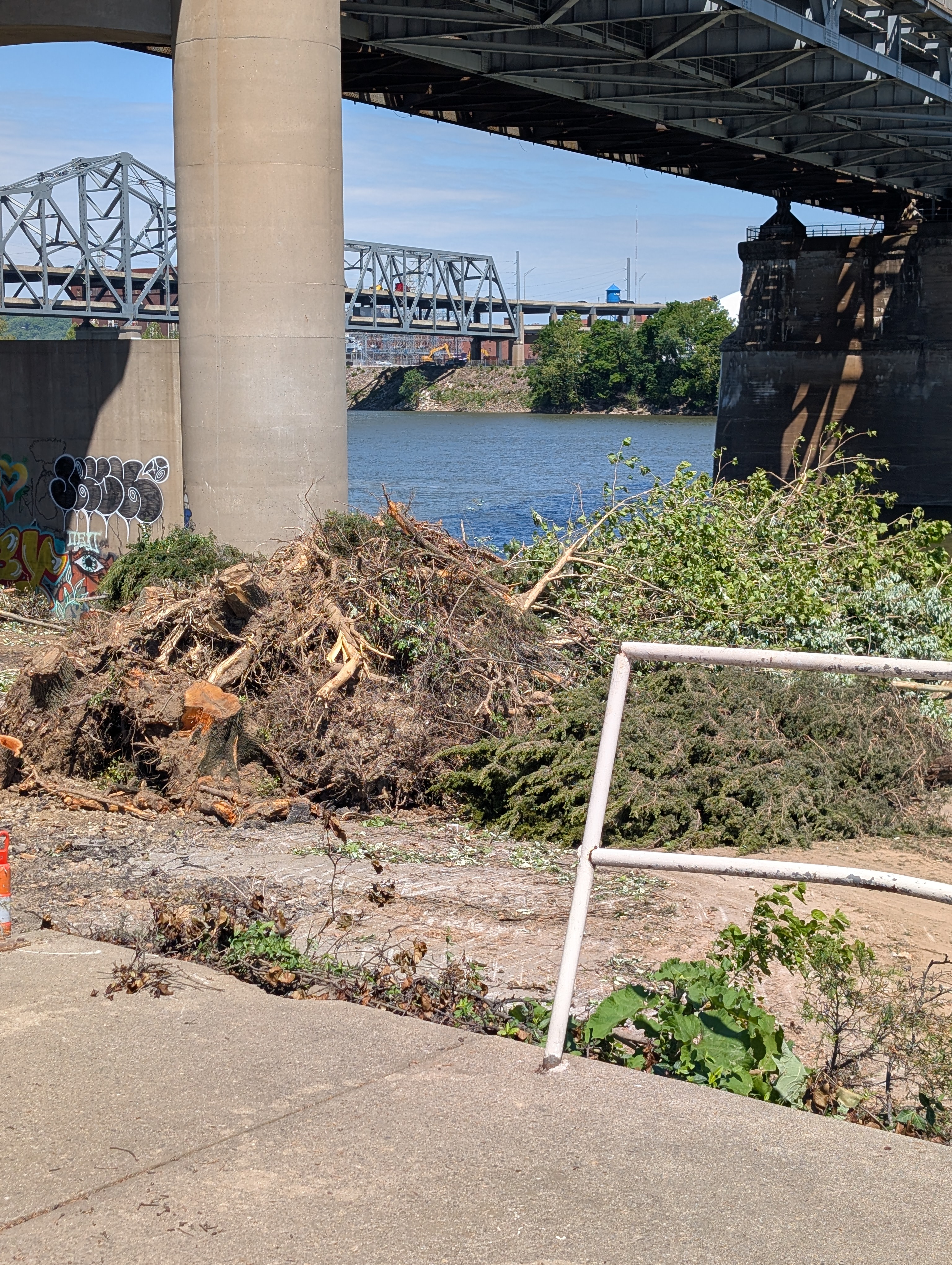
Trees removed along the Riverfront Commons Trail, May 2026 (Matt Butler)
KYTC has promised road improvements along nearby Rivercenter Drive, Third Street and Highway Avenue, but those improvements were not in place by this post, with the closure looming any day now.
Further down I-71/75, demolition has also begun at Kenny Shields Park to make way for access roads and new on/off ramps. What were once two community basketball courts (and the original home of the beloved and civically engaged Covington Street Hockey League) have been reduced to a pile of concrete rubble. Just yards away sits a neighborhood walking path, now compromised, connecting the north and south ends of Covington's historic Mainstrasse Village.
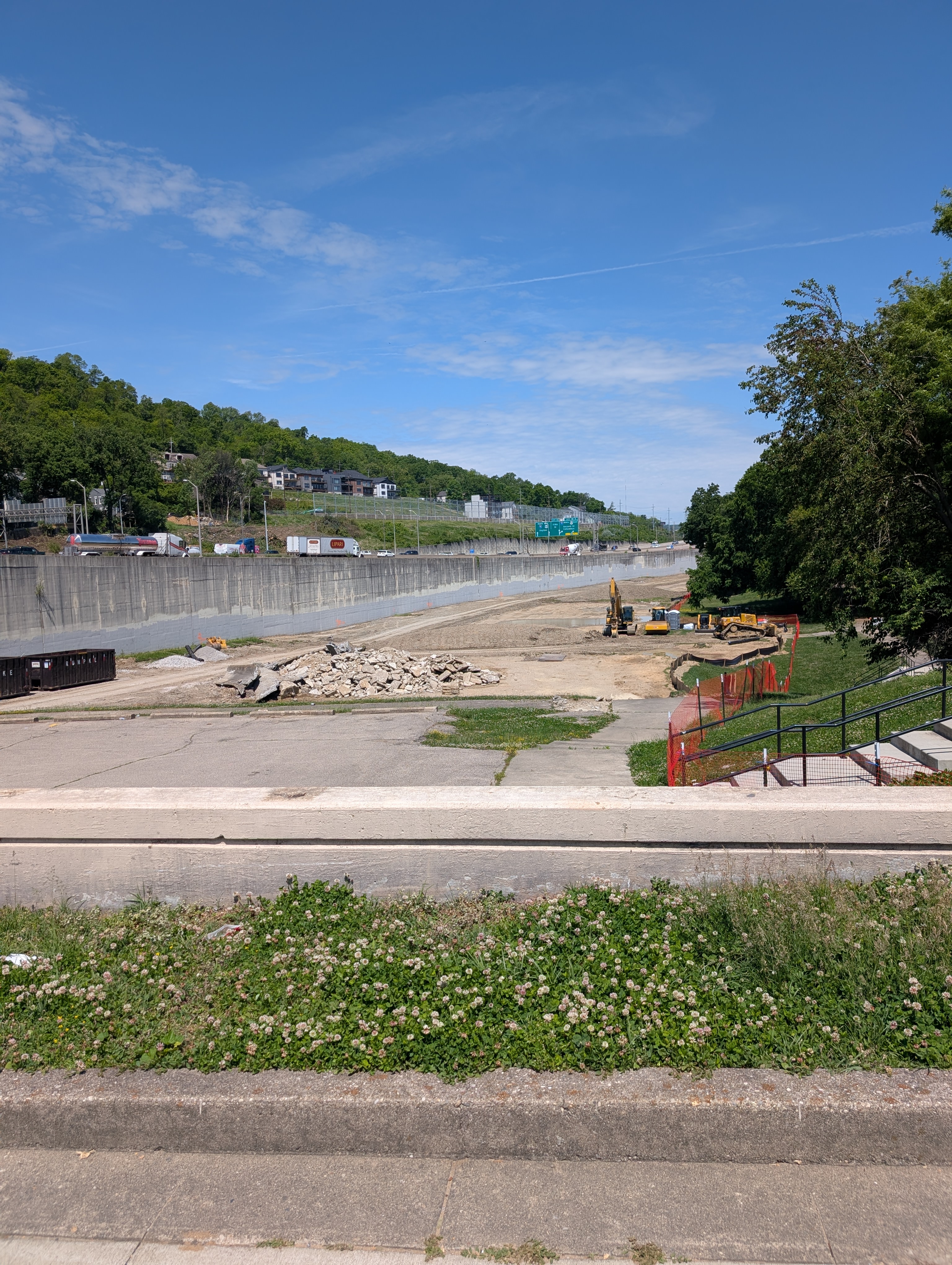
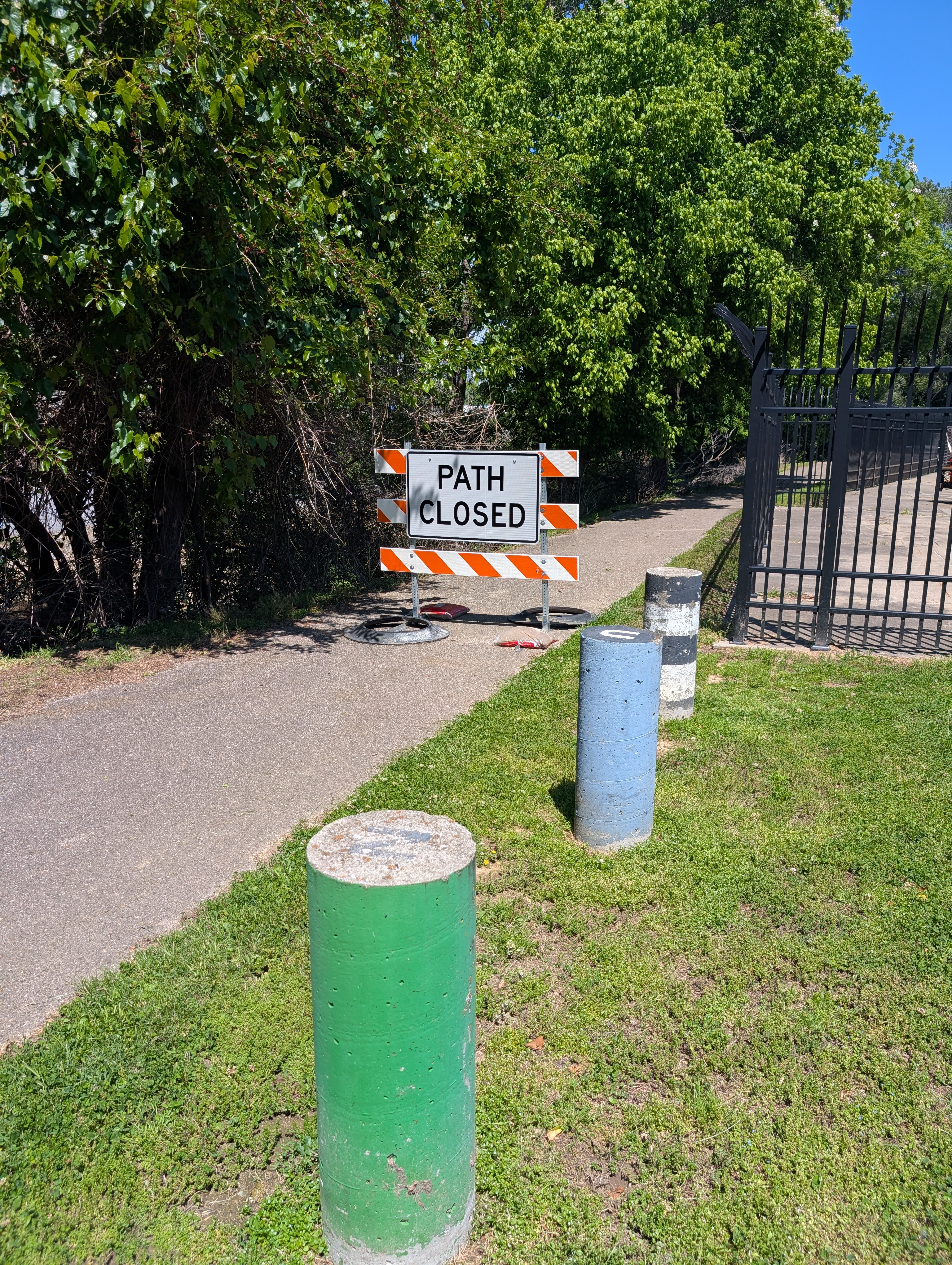
Covington's Kenny Shields Park walking trail, next to the recently decommisioned Goebel community pool, May 2026 (Matt Butler)
Breaking ground or jumping the gun?
None of this is a good sign of what's to come with this massive highway overhaul, particularly because both states seem determined enough to steamroll this road expansion through the region's urban core with no apparent regard or concern over its environmental impacts.
In October 2024, CTSD -- along with several partner organizations -- filed a lawsuit in federal court, pursuant to the National Environmental Protection Act (NEPA), demanding that KYTC and its counterpart to the north, the Ohio Department of Transportation (ODOT) conduct and release a full environmental impact study on the project. It's a step that, earlier that same year, the Federal Highway Administration hastily ruled unnecessary. The lawsuit challenges that baffling and historically near-sighted FHWA ruling.
And it's still pending a judge's decision.
And yet the region's highway-obsessed powers that be felt confident enough to hold a "ribbon-cutting" earlier this year -- possibly an attempt to hide that day's real headline, the project's ballooning cost, now up to more than $4 billion -- and a self-congratulatory groundbreaking today.
If nothing else, their unwillingness to even acknowledge this pending lawsuit and potential -- and justifiable -- delay in the project's progress suggests maybe they consider the environmental impact of this new bridge and highway as just the "cost of doing business"... so long as it keeps car-commuters moving and freight trucks rolling.
That is, at least until induced demand inevitably brings the 16-lane highway back to the same levels of congestion we're seeing today.
A Vision for a Better Brent Spence
An improved Brent Spence corridor doesn't have to be a 16-lane mega-freeway built for just for cars and drivers.
Take a Look